
Key points
- Waking to feed at night is normal for the first few months
- Agree on how you split the night before it starts
- With breastfeeding, a partner can change, wind, settle or occasionally give expressed milk
- Never fall asleep with your baby on a sofa or armchair
The first months come with a lot of nights cut into short pieces. If there are two of you, sharing them can make a real difference. It works best with a plan agreed in daylight and a handover that takes a minute, not a conversation.
Why night feeds are part of the first months
Waking at night is not a sign that something is wrong. The NHS puts it plainly: newborn babies wake up repeatedly in the night for the first few months, and they wake because they need to be fed.
Small stomachs fill and empty quickly. As a rough guide, the NHS says a breastfed baby should feed at least 8 to 12 times, or more, every 24 hours in the first few weeks. Some of those feeds will fall at night.
If you are breastfeeding, night feeds also matter for your milk. The same NHS page explains that you produce more of the milk-making hormone prolactin at night, which is why it recommends breastfeeding then too.
So the goal is not to stop night feeds. It is to share the work around them so that each of you gets a longer stretch of sleep.
Ways to split the night
There is no single right way. What matters is that you agree before the night starts, while you are both awake and thinking clearly.
Shifts
One of you covers the first part of the night and the other covers the second. The person off duty sleeps, ideally somewhere they will not hear every sound. Shifts give each of you one longer block of sleep, which many people find easier than lots of short ones.
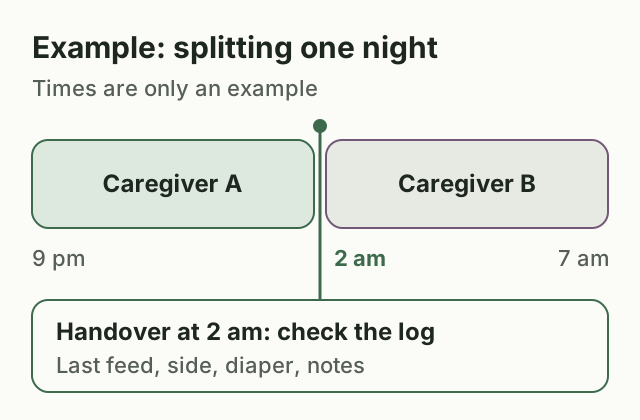
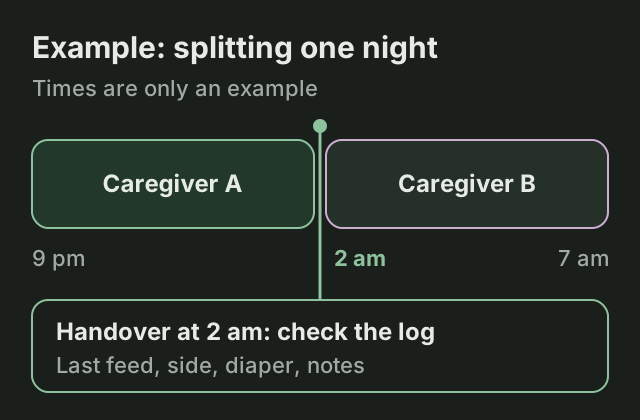
Alternating nights
You take whole nights in turn, so one of you gets a full night off every other night. This can suit bottle feeding, or families where one partner works early shifts on certain days.
If you are breastfeeding
A breastfed baby still needs the person who breastfeeds, but the partner can carry much of the rest. The NHS suggests that a partner takes over the early morning changing and dressing so you can go back to sleep. An NHS partner’s guide adds that partners can bring the baby to you, change the diaper, bring up their wind and rock them to sleep.
Once you are into a good breastfeeding routine, the NHS says your partner could occasionally give a bottle of expressed breast milk during the night. It can take several weeks for you and your baby to feel confident with breastfeeding, so many parents wait until then. The NHS also notes that introducing formula feeds can affect how much breast milk you produce, so talk to your midwife or health visitor if you are unsure.
If you are formula feeding, the NHS simply suggests sharing the feeds. If you are on your own, it suggests asking a friend or relative to stay for a few days so you can sleep.
Staying safe when you are this tired
Night shifts make the person on duty very tired, and that is when the most important safety rules matter most. These come from the NHS and the American Academy of Pediatrics (AAP).
- Never sleep on a sofa or in an armchair with your baby. The NHS says this directly, and the AAP says the risk of sleep-related death is up to 67 times higher when a baby sleeps with someone on a couch or soft armchair.
- If you bring your baby into your bed to feed, the AAP says to place them back in their own sleep space before you go to sleep. If you might fall asleep, remove pillows, blankets and anything that could cover their face, and move them back as soon as you wake.
- Put your baby down on their back, on a firm, flat surface, in their own cot or bassinet in your room for at least the first 6 months.
The two countries differ on sharing a bed. The NHS lists situations in which you should never share a bed with your baby, such as if you or your partner smoke, have drunk alcohol, taken drugs or take medicine that makes you drowsy. The AAP goes further and recommends that parents avoid bed sharing under any circumstances.
If you are on duty and feel yourself nodding off, that is the moment to put your baby down in their own cot, or to wake your partner early.
Log as you go
The hardest part of a handover is memory. At 2 am, few people can say for sure when the last feed ended or which side came last.
The fix is simple: whoever does a feed, a diaper or a settle logs it when it ends. A side, an amount and a short note for anything unusual is enough. Then nobody has to wake the other person to ask.
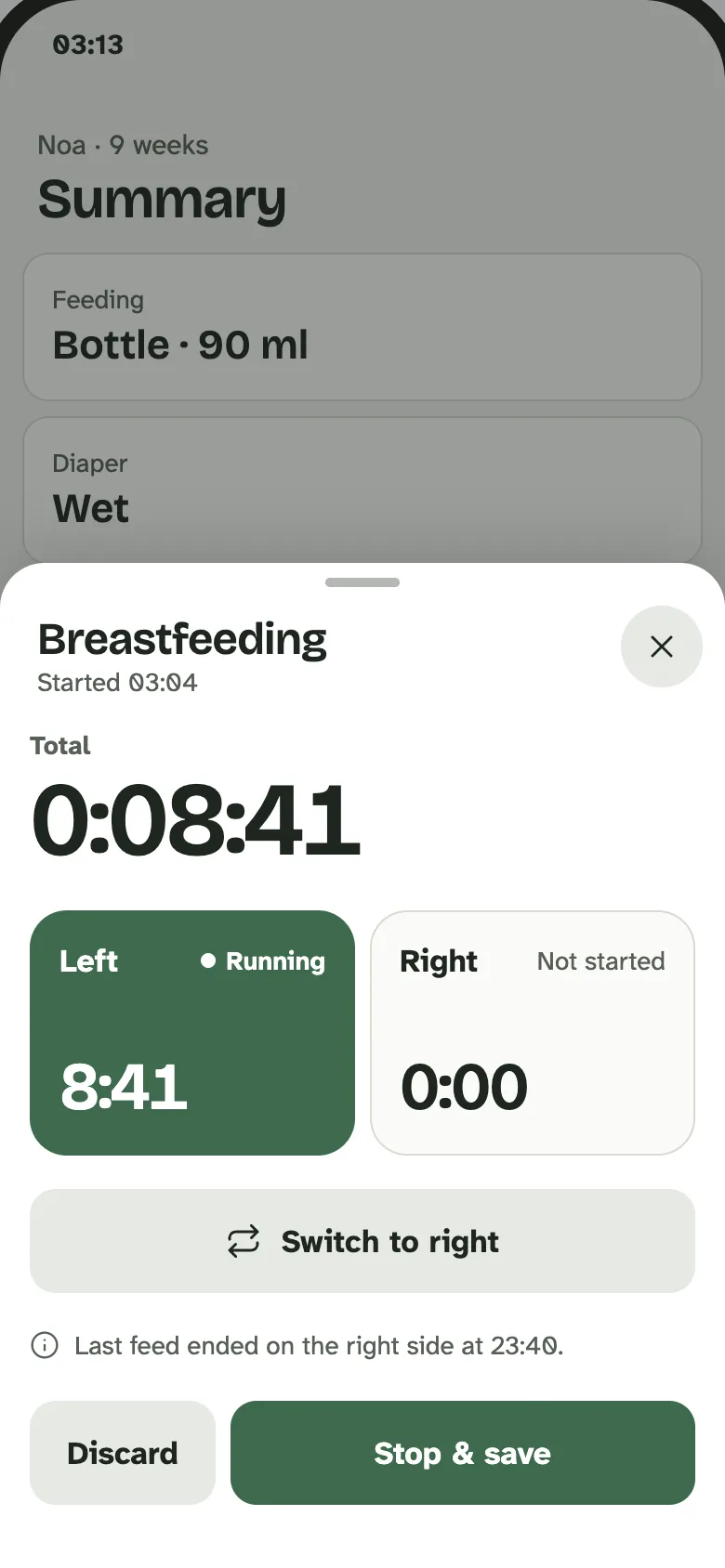
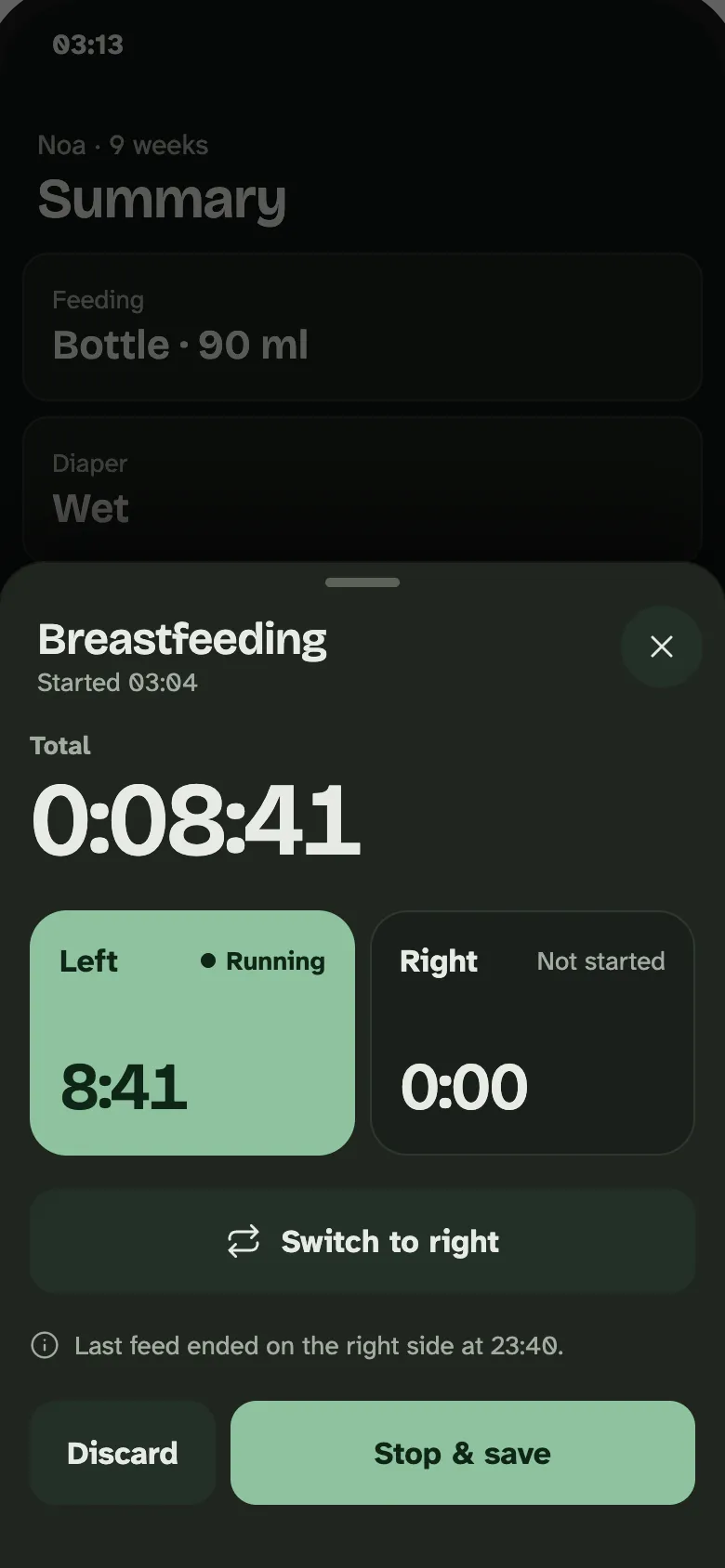
In Baby Tracker, both caregivers add to the same record, and every entry shows who logged it. A running timer can be picked up on either phone, so a feed started by one of you can be finished by the other.
Keep the handover short
When the log is up to date, the handover is quick. The person coming on duty looks at the record and knows what has happened and what comes next.
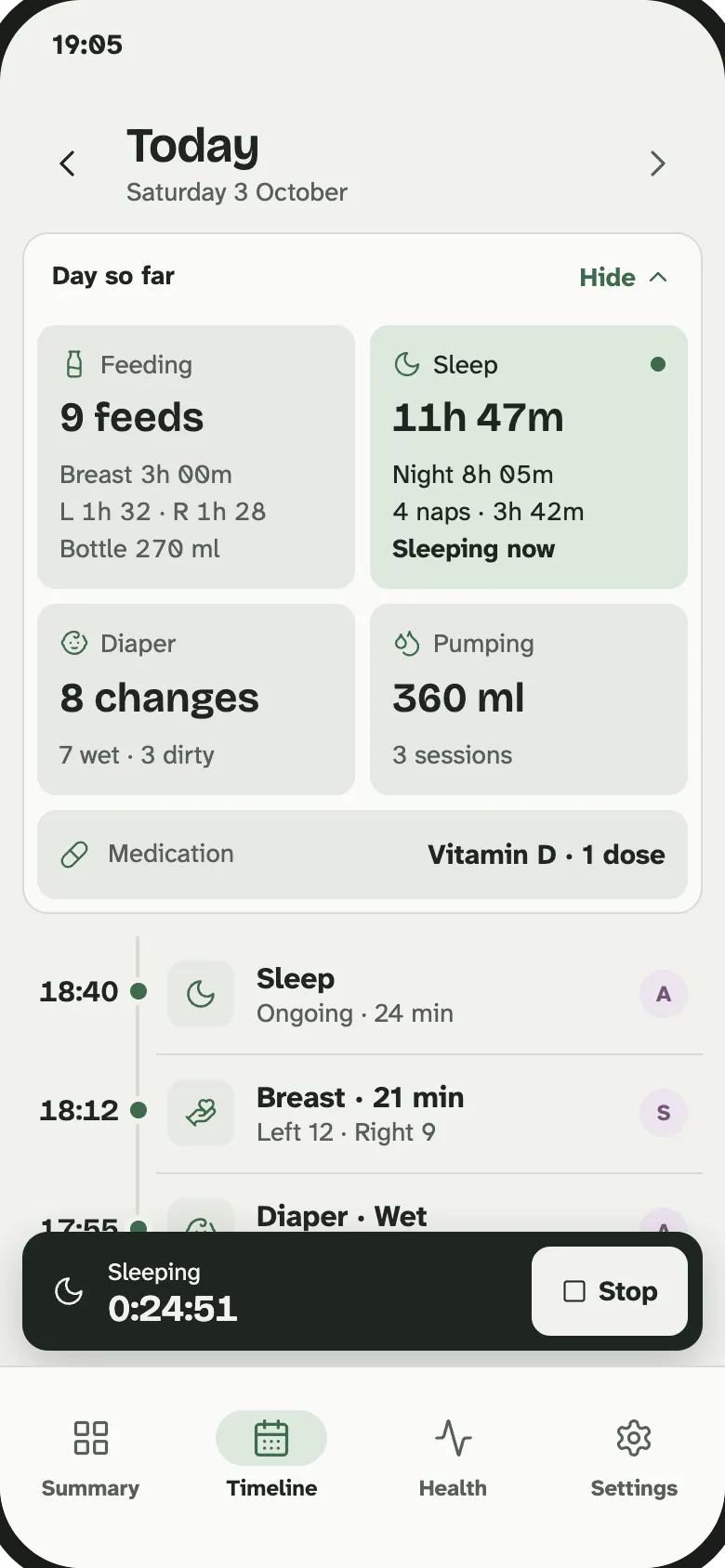
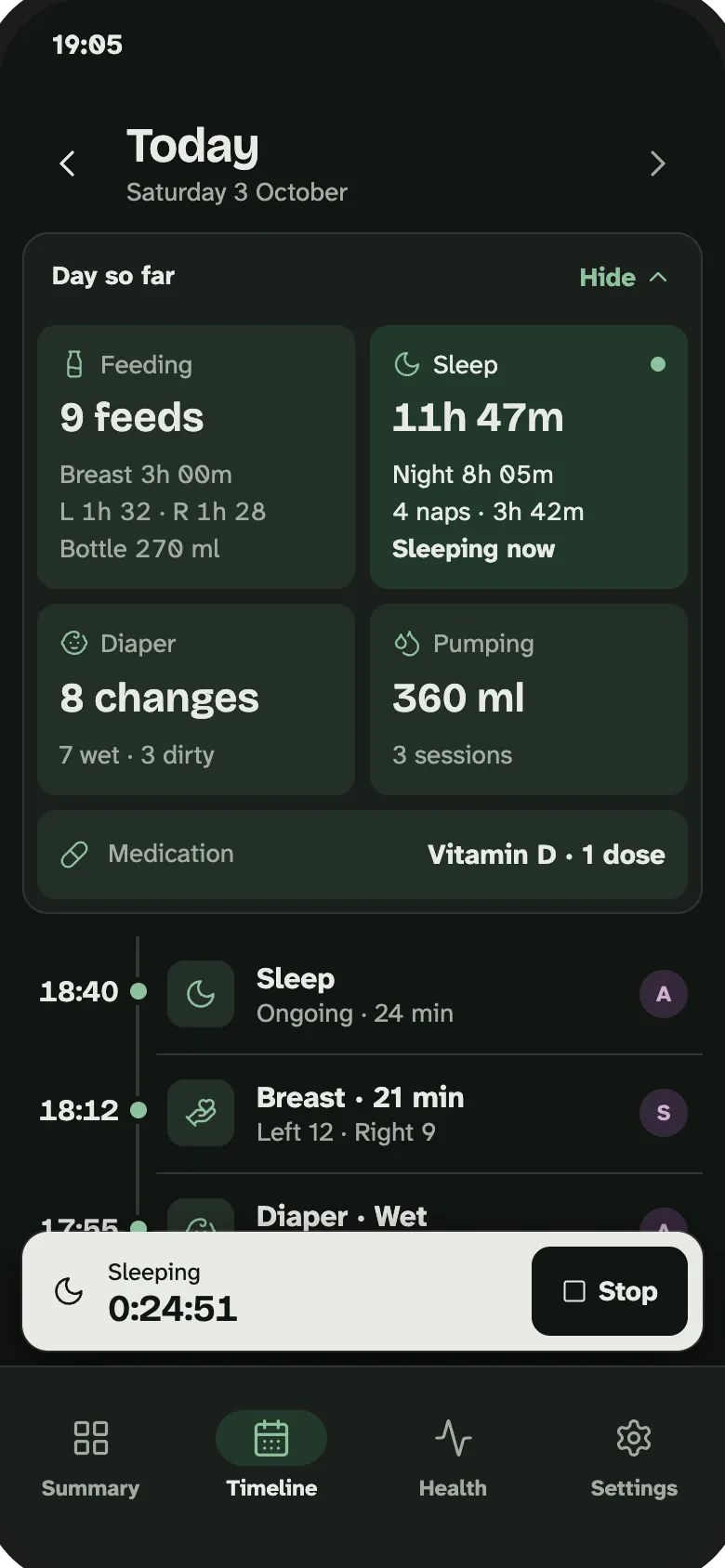
A handover checklist you can read in under a minute: when the last feed ended and on which side or how much, the last diaper, how the baby settled, and any note the other person left. If all four are in the log, you can hand over without a word.
Talk about how it went in the morning, not at 3 am. If one shift is always harder, move the handover time or swap shifts for a few nights. The plan is there to serve you both, so change it whenever it stops working.
Sources
- Helping your baby to sleep, NHS
- Breastfeeding: the first few days, NHS
- How to combine breast and bottle feeding, NHS
- Partner’s guide to breastfeeding, Healthier Together (Aneurin Bevan University Health Board, NHS Wales)
- Sudden infant death syndrome (SIDS), NHS
- How to Keep Your Sleeping Baby Safe: AAP Policy Explained, American Academy of Pediatrics (HealthyChildren.org)
All sources accessed 14 October 2026.
Common questions
Is it normal for a newborn to wake to feed at night?
Yes. The NHS says newborns wake repeatedly in the night for the first few months, because they need to be fed. In the first weeks a breastfed baby usually feeds at least 8 to 12 times in 24 hours.
How can my partner help at night if I am breastfeeding?
The NHS suggests a partner takes over the early morning changing and dressing so you can go back to sleep, and that once breastfeeding is going well they could occasionally give a bottle of expressed milk at night. If you formula feed, you can share the feeds.
What if I am worried about falling asleep while feeding?
Do not feed on a sofa or armchair if you might nod off. The AAP says that if you could fall asleep with your baby in your bed, remove pillows, blankets and anything that could cover their face, and move them back to their own sleep space as soon as you wake.
Where should our baby sleep at night?
The NHS and the AAP both advise a separate cot or bassinet in your room, on their back, for at least the first 6 months.
This guide is general information, not medical advice. Talk to your midwife, health visitor or doctor about your baby's health.